

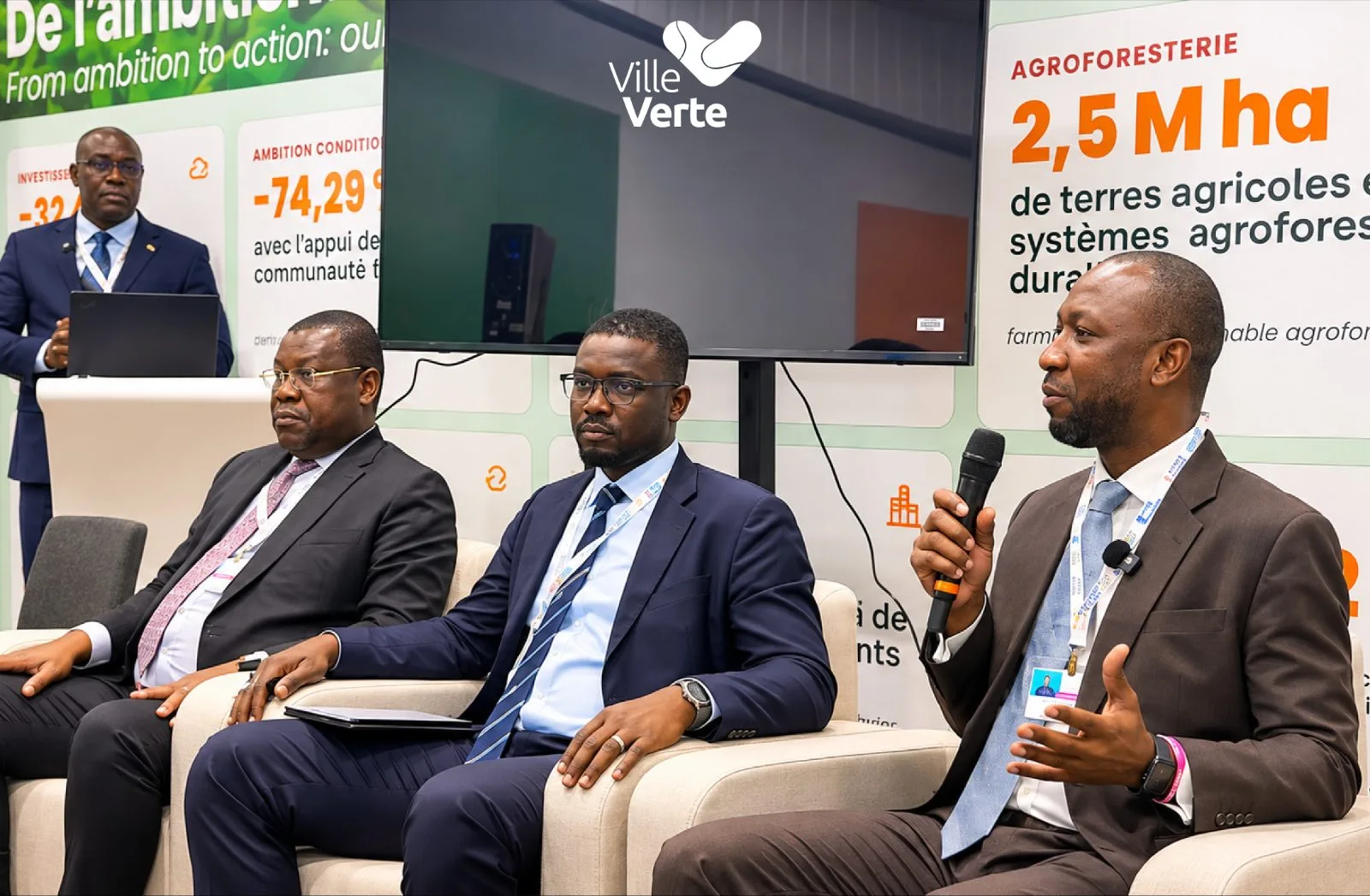
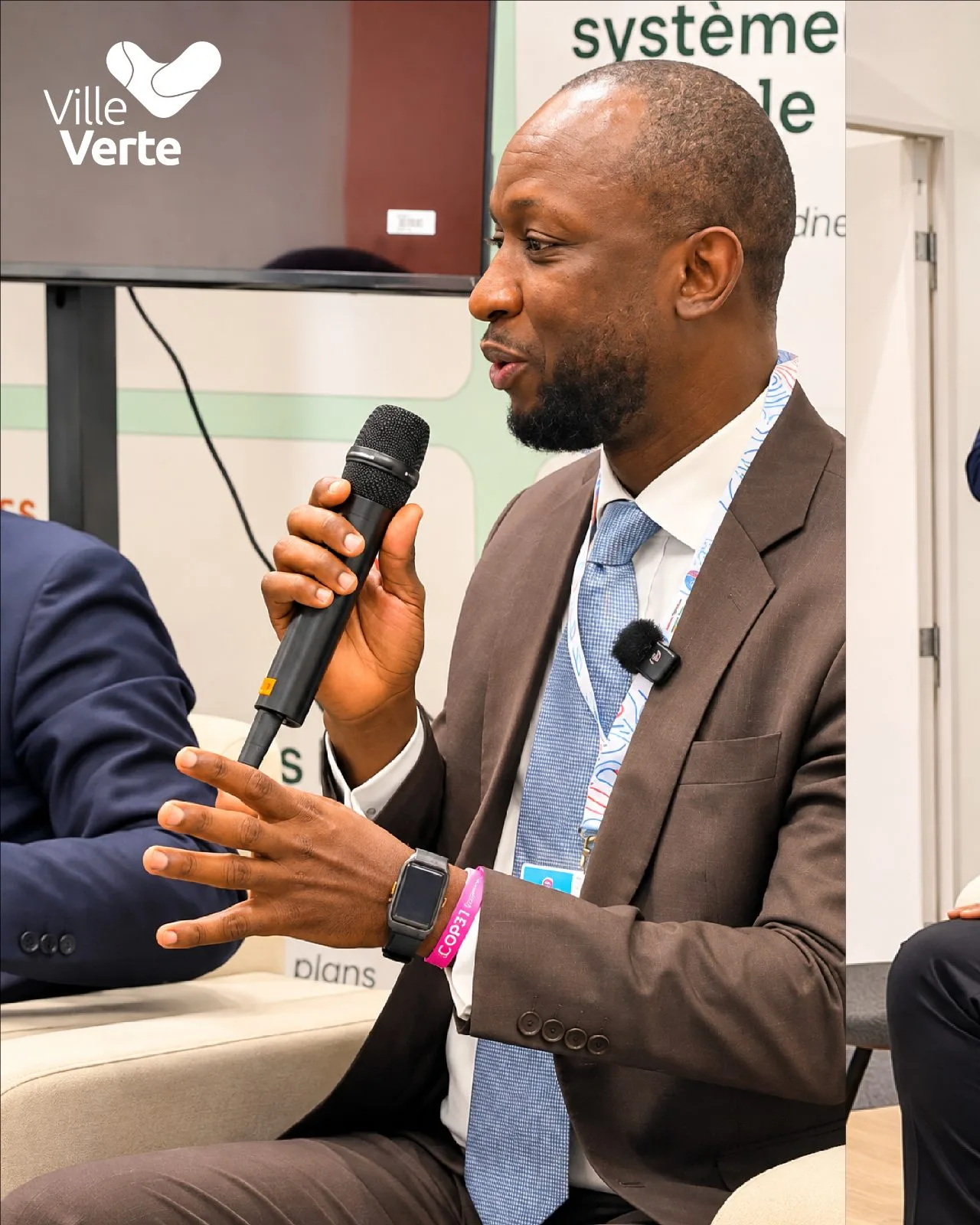
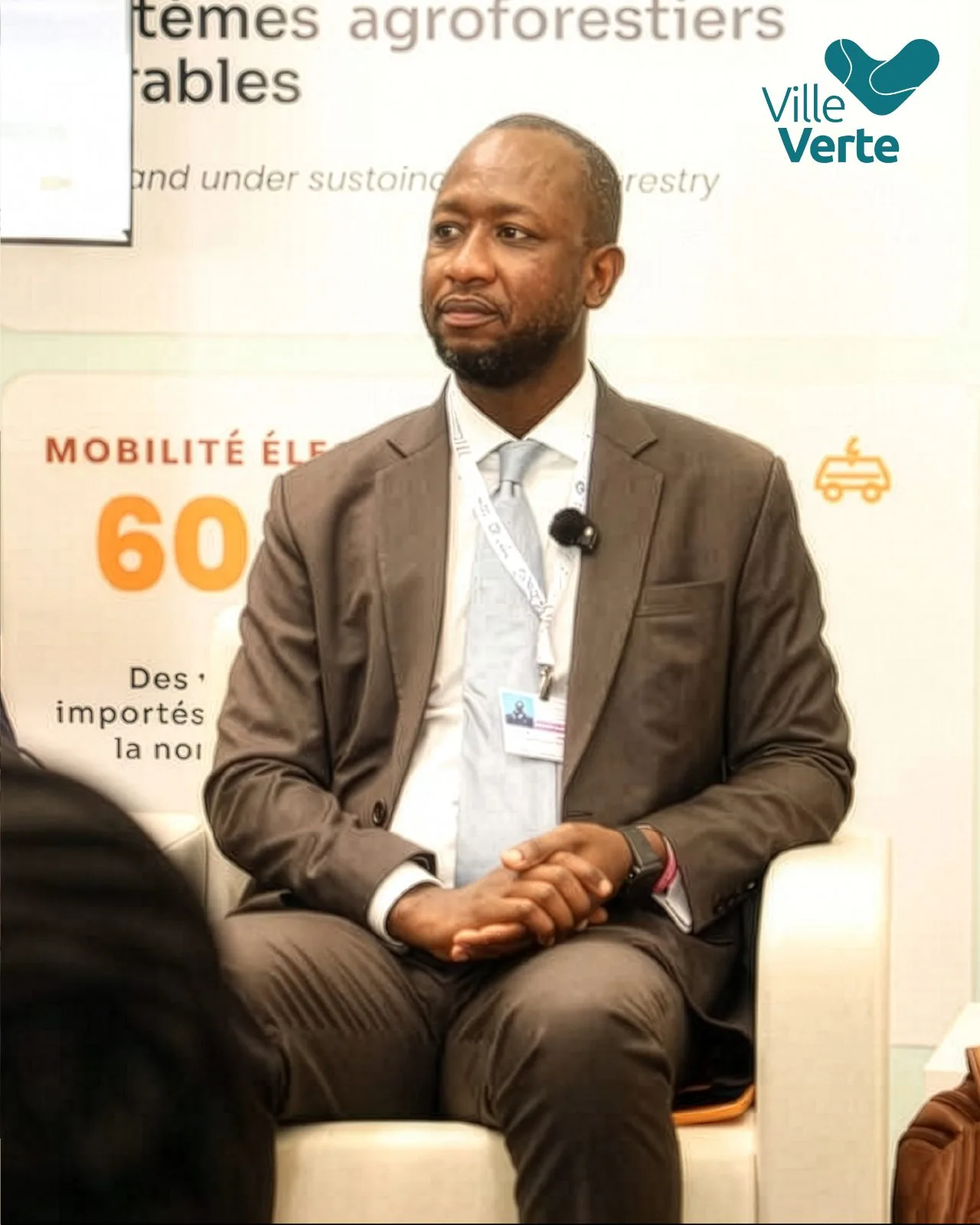
At COP31 in Antalya, the Ministry of Water and Forests of Côte d’Ivoire, in partnership with the Global Green Growth Institute (GGGI), organised a side event devoted to the restoration of urban and peri-urban landscapes. Abdoul Wahab Kane, CEO of Ville Verte, spoke on the panel to share the project’s experience and the issues surrounding the place of nature in urban planning.
Putting nature back at the heart of the city
Held on Wednesday 11 November 2026, the session was organised around the theme: “Restoring landscapes for resilient cities: urban and peri-urban forestry for climate, nature and well-being”.
It presented Côte d’Ivoire’s ambitions for developing urban and peri-urban forestry, while opening the discussion on the financing mechanisms and partnerships needed to implement them.
In this context, Abdoul Wahab Kane, CEO of Ville Verte, took part in the panel devoted to the challenges and solutions for sustainably restoring green spaces in cities.
His contribution was built on one conviction: nature must be integrated from the design stage of urban projects, but its preservation must also be planned for the long term.
Planting early to improve the living environment
One of the first issues addressed was the place of trees in the design of neighbourhoods.
Beyond its landscape value, the tree is a genuine piece of natural infrastructure. It provides shade, helps limit the effects of extreme heat and improves residents’ comfort.
For Ville Verte, greening must be planned from the earliest development phases, even before the first residents arrive. This approach gradually builds a green heritage that grows with the neighbourhood.
Green spaces that help manage water
The talk also highlighted the role of planted areas in stormwater management.
In environments with sandy soils, such as Ville Verte’s, green spaces help water infiltrate and limit run-off.
Greening therefore does not only serve an aesthetic purpose. It contributes to the ecological functioning of the territory and to its ability to better handle rainfall events.
Preserving natural areas over time
Another key point raised by Abdoul Wahab Kane concerns the protection of natural areas against urban pressure.
A green space without protected status can gradually be exposed to other uses and to urbanisation.
At Ville Verte, preserving 90 hectares of classified forest is a structuring choice. It reflects the will to make the protection of natural heritage part of the project’s very planning.
This approach is a reminder that a city’s resilience also depends on its ability to durably preserve the ecosystems that make up its territory.
Creating value from natural resources and involving residents
The long-term survival of natural areas also depends on local people making them their own.
During the discussion, the question of the economic and social value of natural resources was raised. Residents are more likely to help preserve a space when they can draw a use or an income-generating activity from it.
With this in mind, Ville Verte is exploring ways to make use of typha, an invasive plant, with experiments on its use as a building material.
This approach opens up prospects around the circular economy, the use of local resources and new economic opportunities.
From planting to maintenance: thinking long term
One of the main lessons of this talk lies in a phrase from Abdoul Wahab Kane:
“Planting costs little; maintaining costs a lot, and for a long time.”
It sums up a major challenge of urban forestry: beyond the initial investment in planting, it is essential to plan for the human, technical and financial resources needed to maintain natural areas.
Ville Verte’s participation in this panel organised by the Ministry of Water and Forests of Côte d’Ivoire and GGGI was an opportunity to share an approach in which nature plays a structuring role in urban development.
Because building resilient cities is not only about creating green spaces, but about protecting them, giving them value and keeping them alive over time.