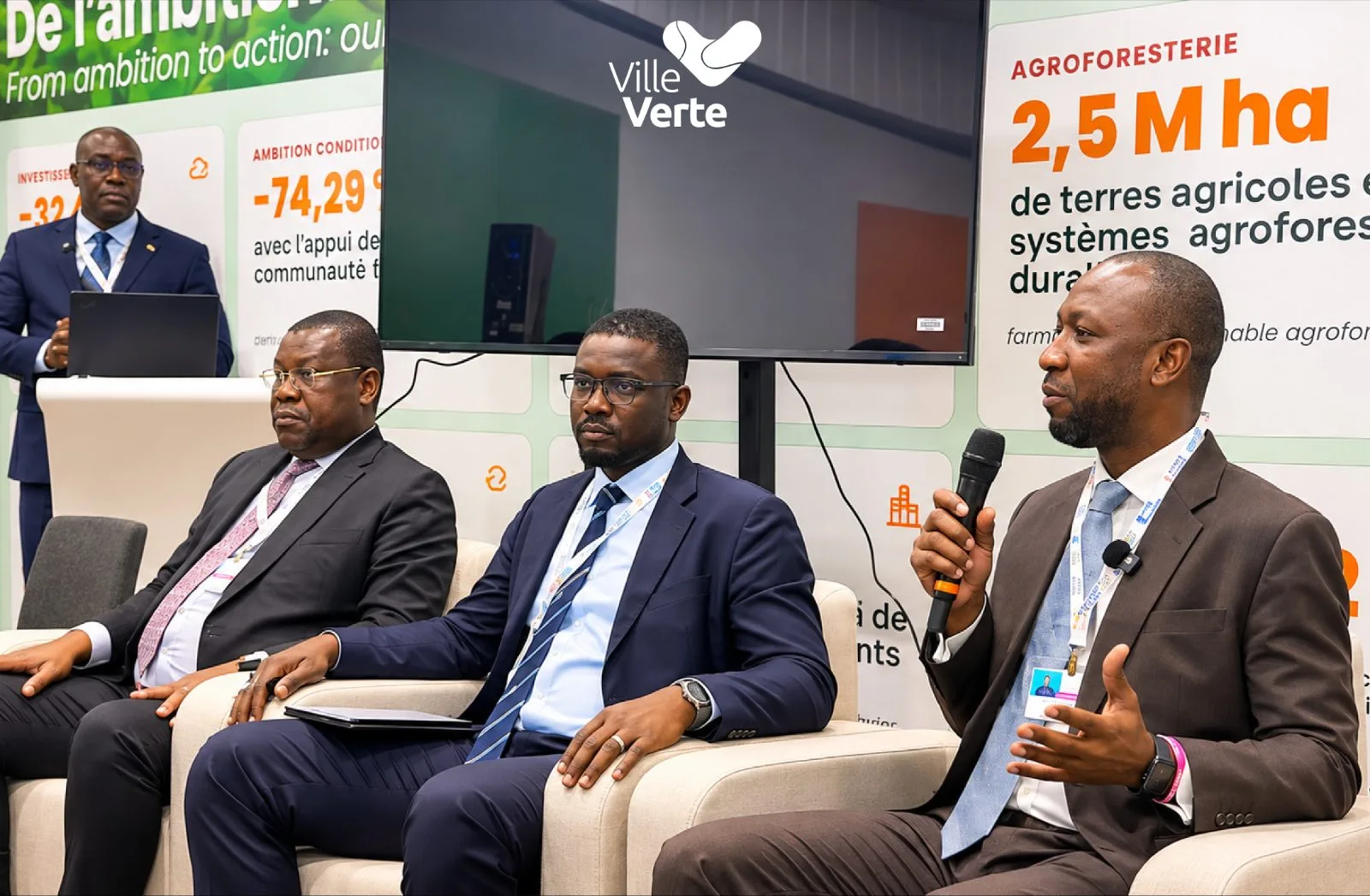


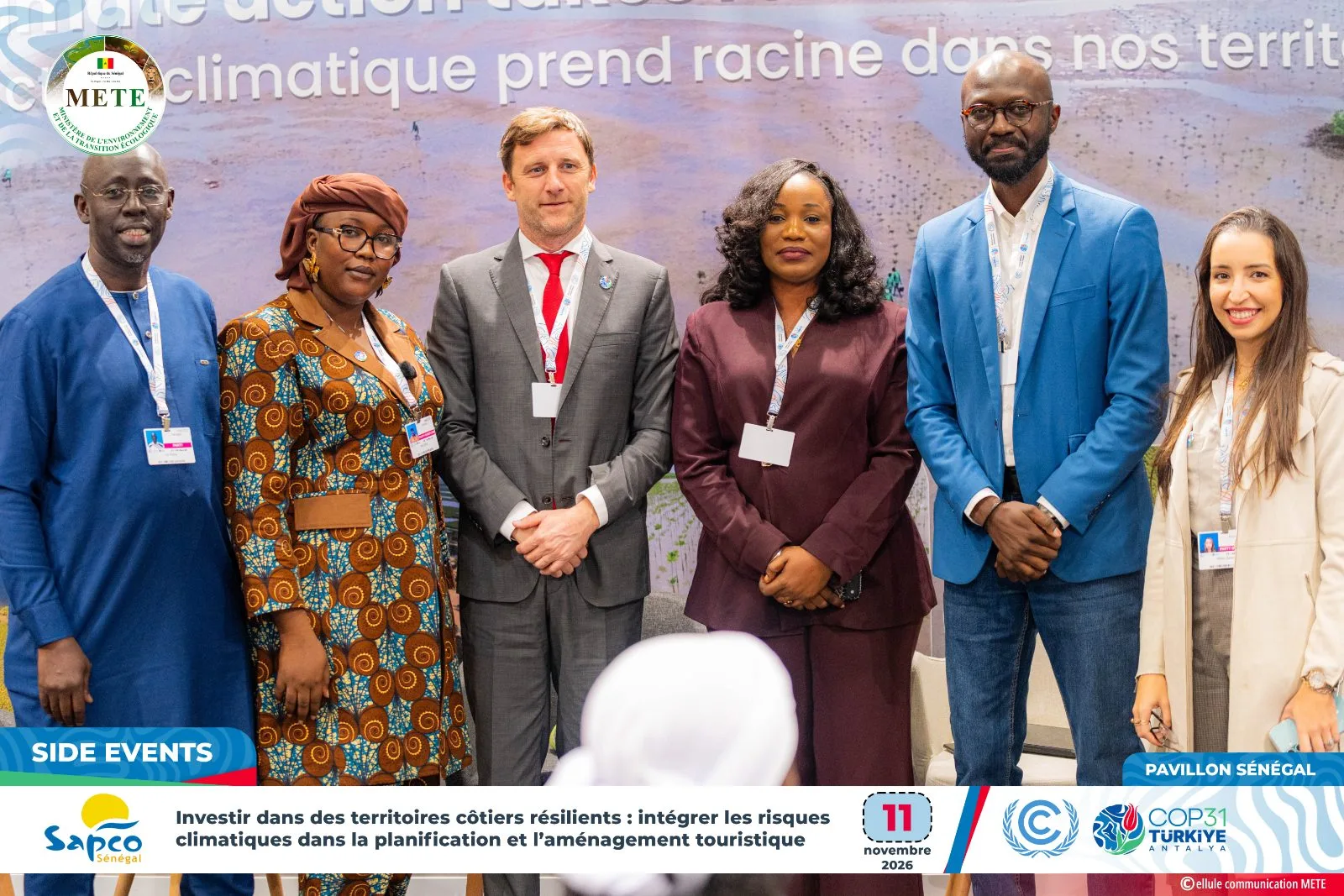
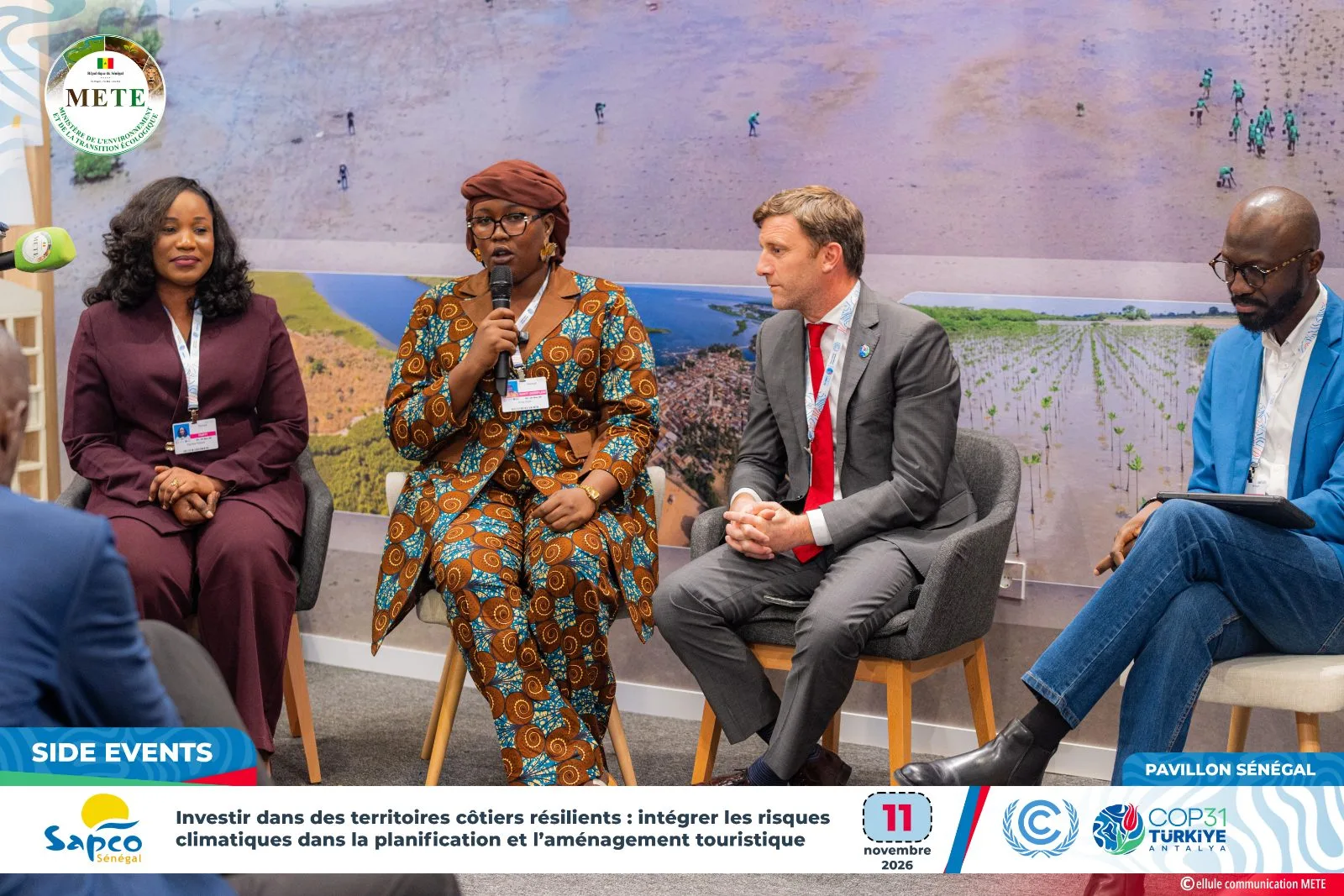
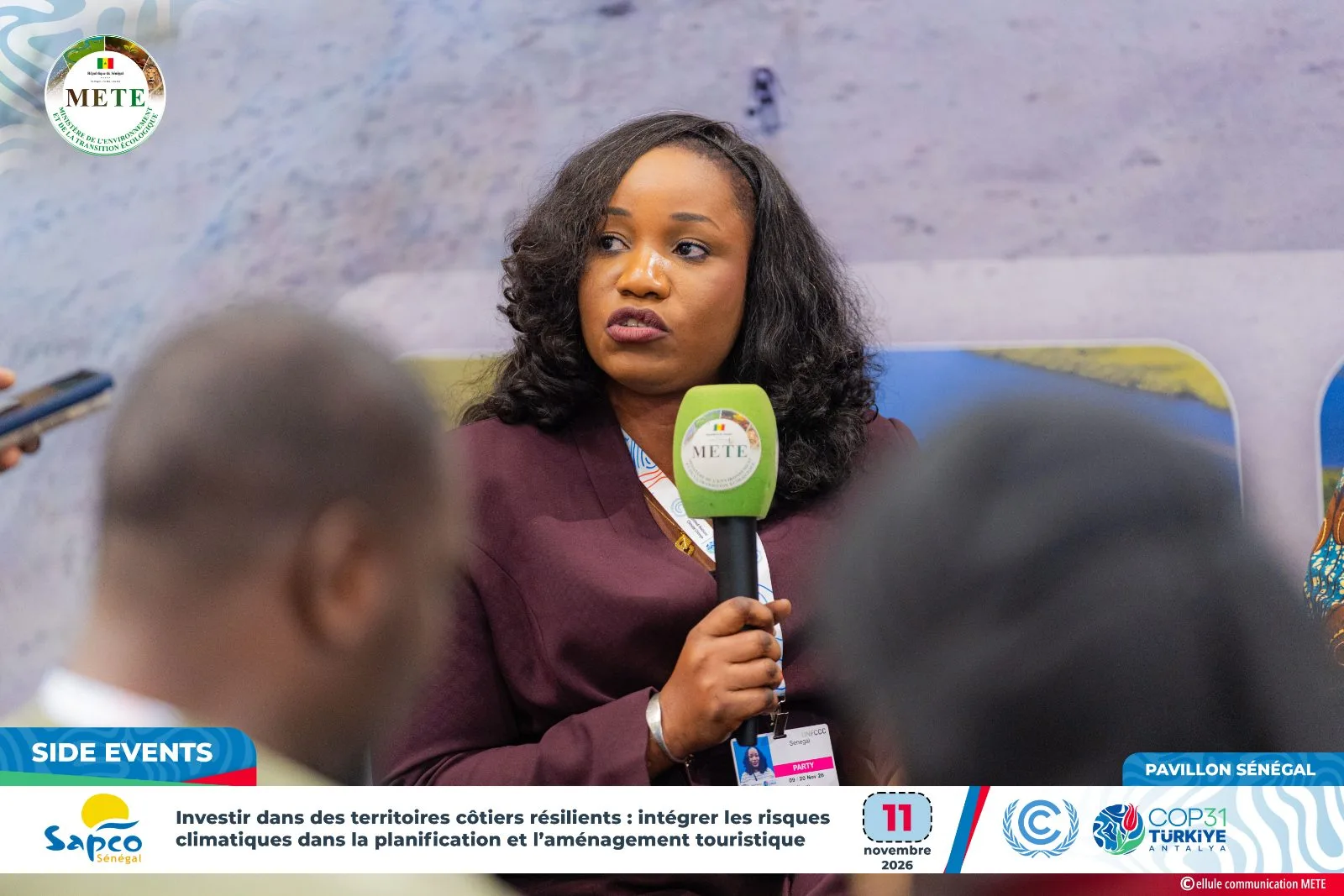
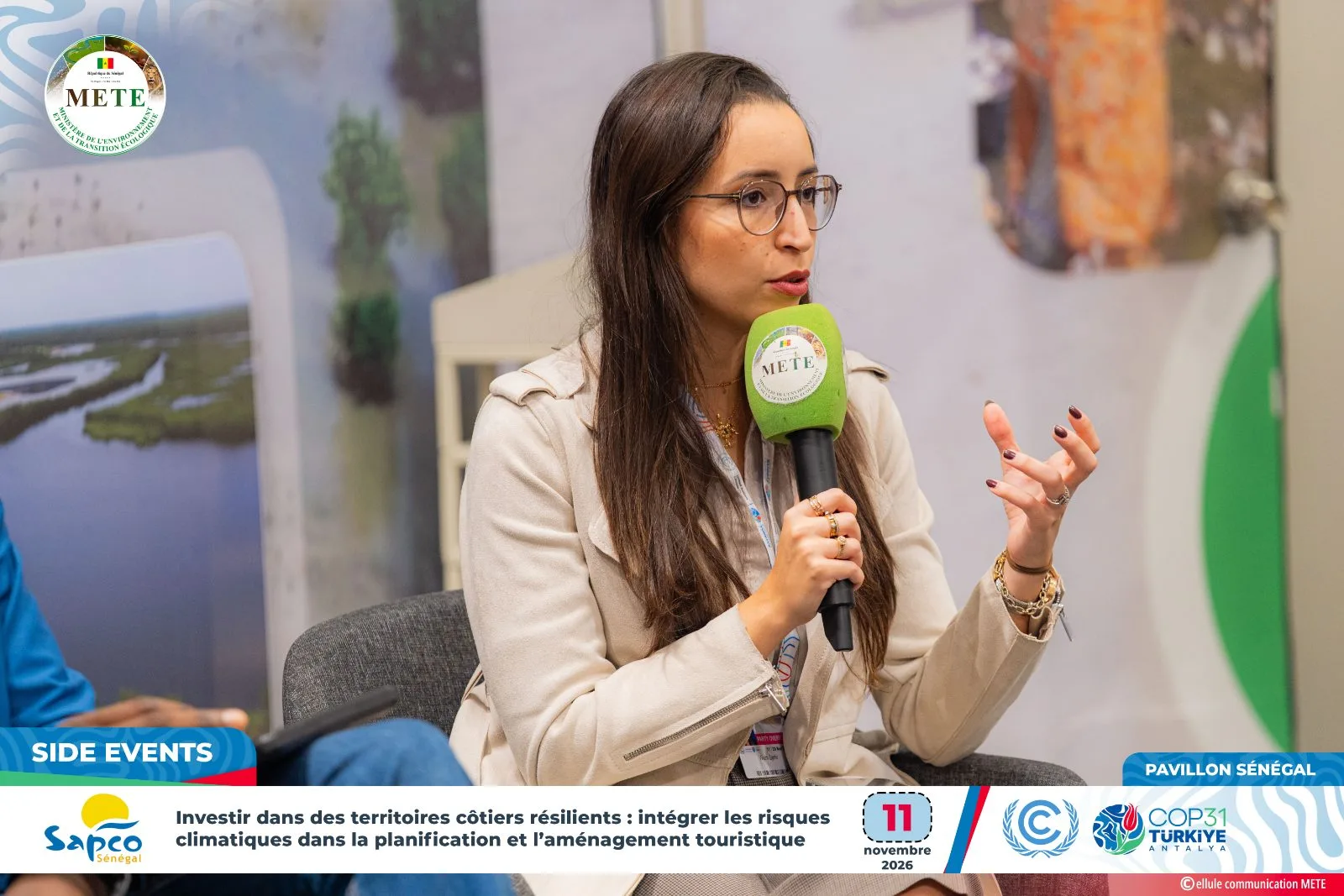
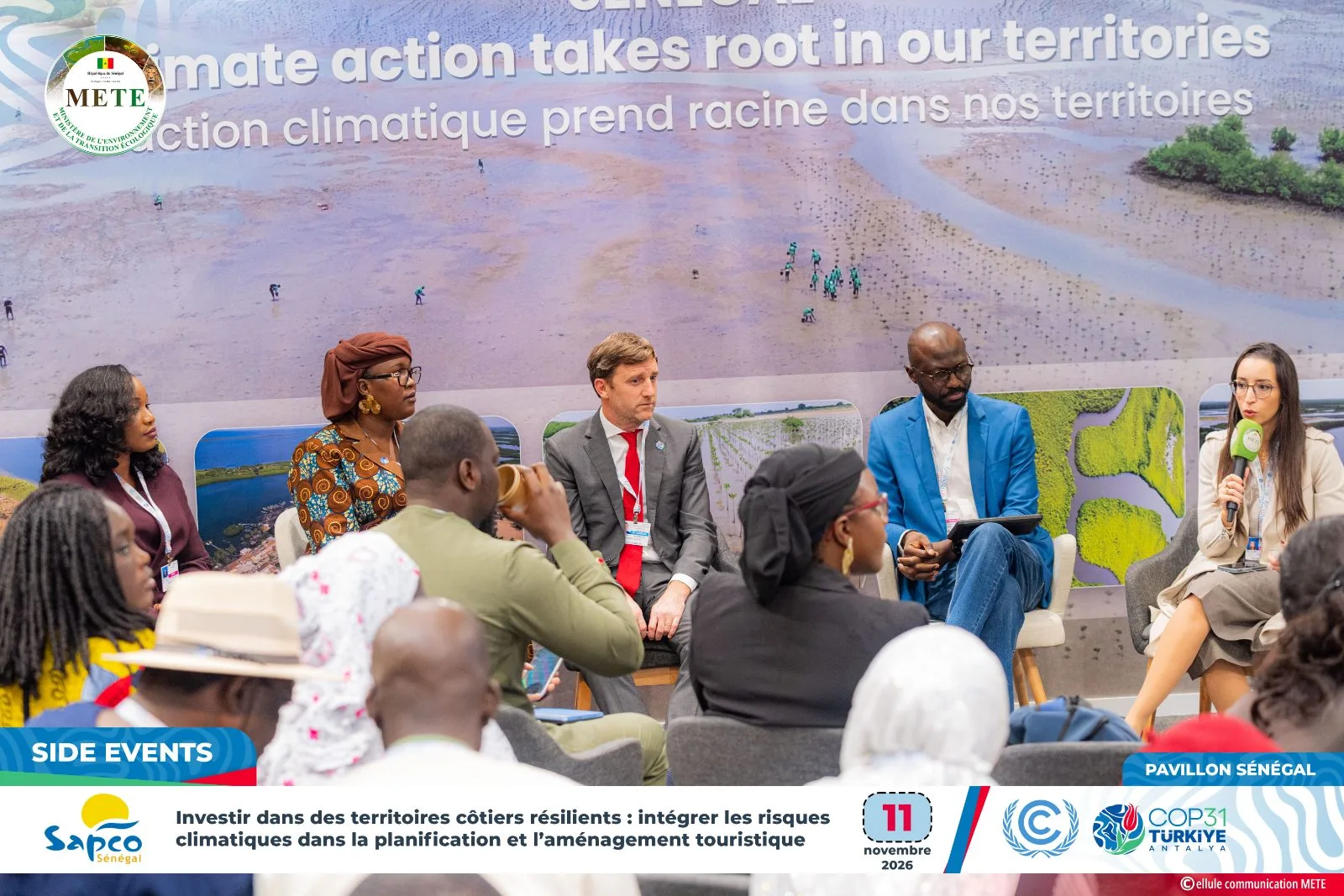
At COP31 in Antalya, SAPCO Sénégal organised, at the Senegal Pavilion, a panel devoted to integrating climate risks into the planning and development of coastal territories. Anta Seck, Head of Environment, Living Environment & IMS at Ville Verte, shared the project’s environmental guidelines and its approach to climate adaptation.
Anticipating risks rather than repairing their consequences
Coastal territories are among the areas most exposed to the effects of climate change. Coastal erosion, fragile dunes, pressure on water resources and the degradation of ecosystems are all challenges for development projects.
These were the issues at the centre of the panel held at the Senegal Pavilion on 11 November 2026, under the theme: “Investing in resilient coastal territories: integrating climate risks into planning and development”.
Anta Seck, Head of Environment, Living Environment & IMS at Ville Verte, presented the project’s environmental guidelines and the development choices made to take account of the ecological features of its site.
The central message sums up what is at stake:
“On the coast, climate risk costs the least at the planning stage.”
In other words, integrating environmental constraints from the design of a project makes it possible to anticipate vulnerabilities and limit the cost of corrective work.
Ville Verte: integrating ecosystems into urban design
Located in the Niayes area, on the outskirts of Dakar, Ville Verte covers 216 hectares. Developed as a public-private partnership with the State of Senegal, through the DGPU, the project takes into account the natural features of an environment marked in particular by dunes and a shallow water table.
Several guidelines shape its environmental approach:
- Preserving existing ecosystems: 90 hectares of classified forest are maintained within the project perimeter.
- Strengthening dune protection: the belt of filao trees plays an important role in fixing and stabilising them.
- Encouraging water infiltration: 15 hectares of green spaces contribute to stormwater management and soil preservation.
- Ensuring environmental monitoring: the dunes and the water table are closely monitored.
These measures reflect an approach in which natural components are not treated as secondary elements of the project, but as structuring factors in urban planning.
Mobilising private investment for resilience
Beyond technical choices, the discussion also highlighted the conditions needed to encourage the private sector to invest in climate adaptation.
Four levers in particular were underlined:
- Stable rules and regulatory frameworks to secure investment.
- A balanced sharing of risk between public authorities and developers.
- Financing mechanisms that reward investments contributing to climate resilience.
- Including the financing of the maintenance of natural areas in projects’ business models.
The question of maintenance is essential: preserving an ecosystem over time requires resources, organisation and a commitment that go beyond the design phase alone.
A major economic issue for African coastal countries
The urgency to act can also be measured by its economic consequences. World Bank data cited during the discussion indicate that in 2017 the degradation of coastal areas cost Benin, Côte d’Ivoire, Senegal and Togo 3.8 billion dollars, or 5.3% of their combined GDP.
These figures are a reminder that coastal resilience is also a matter of economic development, protection of investments and preservation of livelihoods.
Planning today to protect the territories of tomorrow
This panel organised by Ville Verte and SAPCO at COP31 recalled an essential conviction: the resilience of coastal territories is built long before risks appear.
Through its environmental approach, Ville Verte intends to place the preservation of ecosystems and climate anticipation at the heart of its project’s design.
An approach that invites us to rethink coastal development as a lasting balance between urban development, protection of natural heritage and territorial resilience.